Free tools • Instant results • No signup
Why Minimum Payments Keep You in Debt (And How to Break Free)
Discover why credit card minimum payments keep you in debt and how to pay off your balance faster. Learn strategies and use our free calculator.
CREDIT CARD STRATEGIES
Rachel
3/31/20262 min read


Still in debt even though you’re making payments every month?
You’re not alone — and the problem is usually minimum payments.
While paying the minimum keeps your account in good standing, it can also trap you in long-term debt due to high interest and slow balance reduction.
In this guide, you’ll learn:
Why minimum payments keep you stuck
How interest works against you
What you can do to get out of debt faster
What Is a Minimum Payment?
A minimum payment is the smallest amount you’re required to pay each month on your credit card.
It’s usually based on:
A percentage of your balance (1%–3%)
Interest charges
Fees
👉 It’s designed to keep your account active — not to help you get out of debt quickly
Why Minimum Payments Keep You in Debt
1. Most of Your Payment Goes to Interest
When you carry a balance, interest is added every month.
So when you make a payment:
A large portion goes to interest
Only a small part reduces your actual balance
👉 That’s why your debt barely moves.
2. Your Balance Decreases Very Slowly
Even if you pay every month:
The balance drops little by little
Interest keeps adding back
Example:
Balance: $5,000
APR: 18%
Minimum payment: ~$100
👉 It could take 10+ years to fully pay off
3. You Pay Thousands More Over Time
Minimum payments may feel easier now, but they cost more later.
You stay in debt longer
You pay significantly more in interest
Your total repayment can double
Try This: Minimum Payment Calculator
Want to see how your minimum payment is calculated?
👉 Use our Credit Card Minimum Payment Calculator to:
Estimate your minimum monthly payment
See how much goes to interest
Understand how little reduces your balance
This gives you a clear picture of why progress can feel slow.
Compare It With a Payoff Strategy
Minimum payments keep you in debt.
But increasing your payments changes everything.
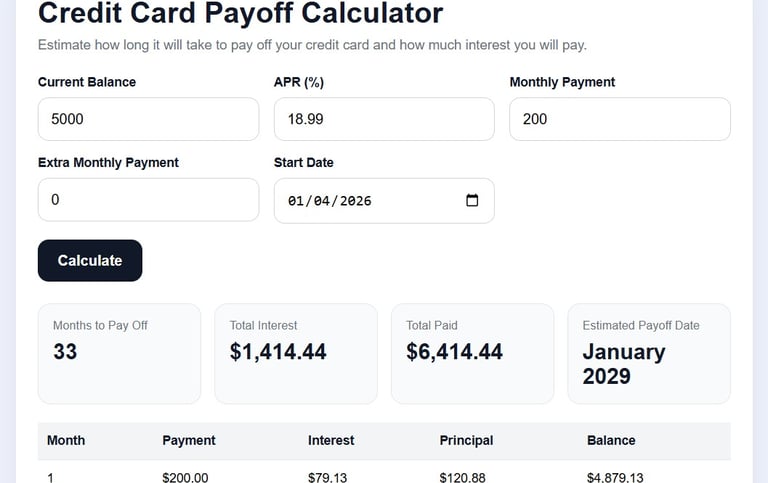
👉 Try your numbers in a payoff calculator to see:
How long it takes to become debt-free
How much interest you can save
How to Break Free From Minimum Payments
1. Pay More Than the Minimum
Even an extra $50–$100/month can:
Reduce years off your debt
Save thousands in interest
2. Use a Strategy (Avalanche or Snowball)
Avalanche → Pay highest interest first (saves money)
Snowball → Pay smallest balance first (builds motivation)
3. Track Your Progress
Using calculators helps you:
Stay motivated
See real progress
Make smarter financial decisions
4. Avoid Adding New Debt
Try to:
Limit new spending
Focus on reducing your current balance
Frequently Asked Questions
Is paying the minimum bad?
Not always short-term, but long-term it keeps you in debt and increases total interest.
Why is my balance not going down?
Because most of your payment is going toward interest, not the principal.
How can I pay off debt faster?
Pay more than the minimum and use tools to plan your repayment strategy.
Final Thoughts
Minimum payments are designed to keep you paying — not to help you get out of debt.
If you want to take control:
Understand how your payments work
Use calculators to plan
Pay more whenever possible
👉 Small changes can lead to big results over time.
ClearEveryday
Free financial calculators and practical money tools for everyday decisions.
Plan your budget, manage debt, build savings, explore investing and understand your money — with simple tools and no sign-up required.
Link
© ClearEveryday 2026. All rights reserved.
About
“For informational purposes only — not financial advice.”