Free tools • Instant results • No signup

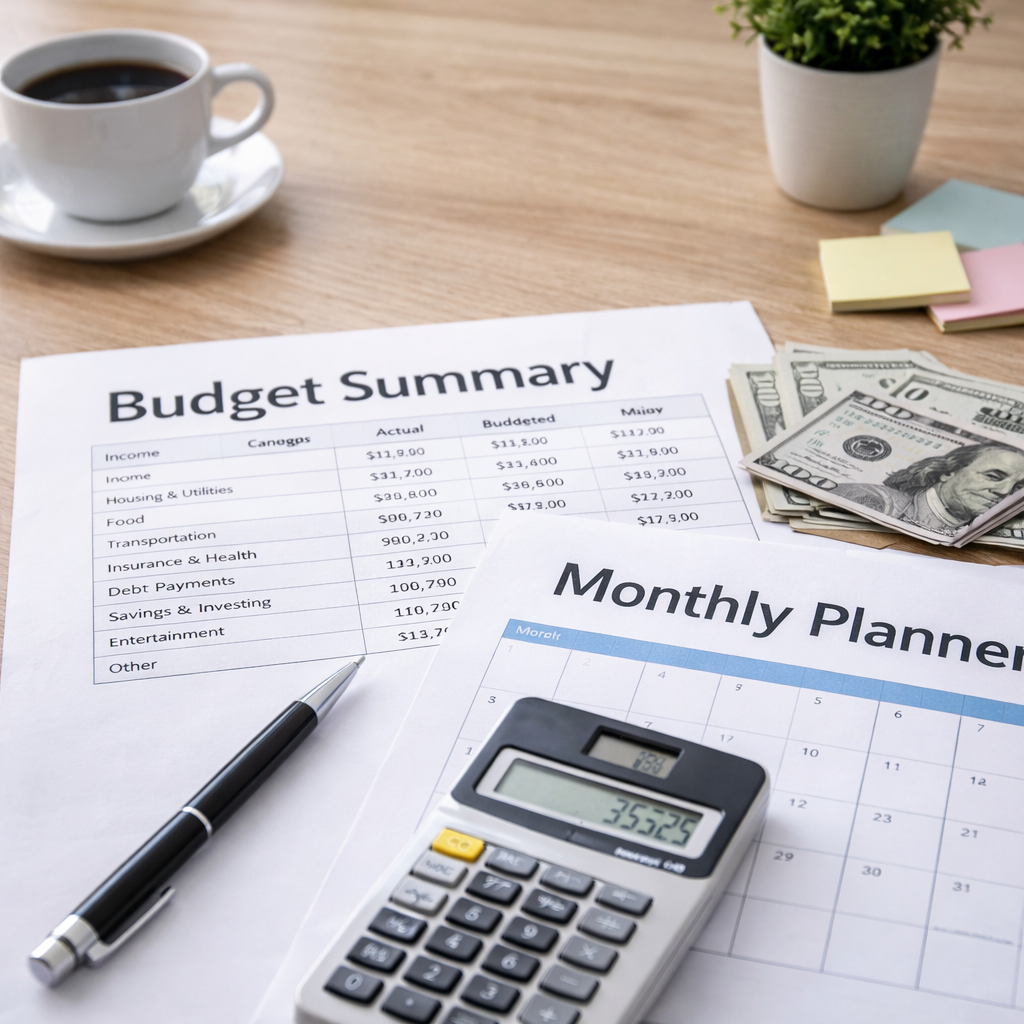
Use our Budget Planner to track your income, expenses, savings, and debt in one place. See where your money goes, manage spending, and work toward your financial goals.
Budget Planner
How to use this Budget Planner
Enter your monthly income, regular household bills, everyday living costs, savings contributions, debt payments, and other expenses, and click Calculate. The calculator will estimate your total monthly income, total monthly expenses, monthly balance, and savings rate based on the figures entered.
Disclaimer: This is a general estimate only. Actual budgeting results may vary depending on irregular expenses, changing bills, taxes, income changes, and personal spending habits. Always review your budget regularly and use accurate financial records when making money decisions.
Real-Time Calculations
No Signup Required
What Is a Budget Planner?
A Budget Planner is a tool that helps you organise your income, expenses, savings, investments, and debt payments in one place.
It gives you a clear picture of where your money goes each month and how much you have left after your regular financial commitments.
Using a budget planner can help you manage spending, identify areas to save, plan for debt repayments, and work toward your financial goals.


Budget Planner vs Budget Calculator — What’s the Difference?
Both tools help you manage your money, but they serve different purposes.
Budget Calculator
Best for a quick overview. Enter your income and main expenses to see your total spending, remaining balance, and savings rate.
Budget Planner
Best for detailed monthly planning. Organise your income, household bills, everyday expenses, savings, investments, and debt payments across individual categories.
Which should you use?
Use the Budget Calculator for a quick financial snapshot. Use the Budget Planner when you want a more detailed, category-by-category plan you can review each month.
How to Build a Monthly Budget — Step by Step
Building a budget doesn’t need to be complicated. Start with your income, cover your essential expenses, then decide how much you can put toward savings, debt, and other spending.
Step 1 — Calculate your monthly income
Enter your regular take-home income. If your income varies, use a realistic monthly average or a conservative estimate.
Step 2 — List your essential expenses
Include housing, utilities, groceries, transport, insurance, childcare, healthcare, and other necessary costs.
Step 3 — Add debt payments
Include credit cards, personal loans, car loans, buy-now-pay-later payments, and other regular debt repayments.
Step 4 — Include savings and investments
Add the amount you want to contribute toward your emergency fund, savings goals, retirement, or investments each month.
Step 5 — Add lifestyle spending
Include dining out, entertainment, shopping, subscriptions, hobbies, and other non-essential spending.
Step 6 — Check what’s left
Subtract your expenses, debt payments, savings, and investments from your income. If you're spending more than you earn, look for categories you can adjust.
Step 7 — Review your budget regularly
Your budget will change as your income, bills, and goals change. Review it regularly and update your figures when needed.
Budgeting for Different Household Situations
Every household has different expenses and priorities. Your budget should reflect your income, living costs, responsibilities, and financial goals.
Single-person budget
With one income covering most expenses, focus on keeping essential costs manageable while setting aside money for savings, emergencies, and future goals.
Couple budget
Decide how you will manage shared expenses, savings, and debt payments. You might combine finances, keep separate accounts, or use a mixture of both.
Family budget
Include childcare, education, clothing, food, activities, healthcare, and other family expenses. Remember to plan for irregular costs that may not occur every month.
Renter budget
Include rent, utilities, insurance, transport, and other regular living expenses. If housing takes up a large part of your income, review other categories to keep your overall budget manageable.
Homeowner budget
Budget for more than your mortgage payment. Include insurance, property-related charges, maintenance, repairs, utilities, and other ongoing homeownership costs.
Tip: There is no single budget that works for everyone. Use your actual numbers and adjust your plan as your income, expenses, and priorities change.
Practical Budgeting Tips
A realistic budget is easier to maintain than a perfect one. These simple habits can help you stay on track and make better decisions with your money.
Review your recent spending
Check your bank and card statements before creating your budget. Using your actual spending gives you a more realistic starting point.
Plan for irregular expenses
Include costs that don't occur every month, such as insurance, annual fees, repairs, gifts, or school expenses. Divide larger yearly costs into monthly amounts where helpful.
Separate money for different purposes
Consider keeping money for bills, everyday spending, and savings separate. This can make it easier to see what is available to spend.
Check your budget regularly
A quick weekly review can help you spot overspending early instead of discovering it at the end of the month.
Keep your targets realistic
Avoid cutting every category too aggressively. Start with achievable changes you can maintain over time.
Adjust when life changes
Update your budget when your income, bills, debts, or financial goals change. Your budget should change with you.
Frequently Asked Questions
What is a Budget Planner?
A Budget Planner helps you organise your income, expenses, savings, investments, and debt payments so you can see where your money goes each month.
How do I create a monthly budget?
Start with your take-home income, then add essential expenses, debt payments, savings, investments, and lifestyle spending. Compare the total with your income to see how much you have left.
What expenses should I include in my budget?
Include housing, utilities, groceries, transport, insurance, healthcare, childcare, debt repayments, savings, subscriptions, entertainment, and other regular or irregular expenses.
How often should I review my budget?
A monthly review is a good starting point, with quick weekly checks if you want to monitor your spending more closely.
What if my expenses are higher than my income?
Review your spending categories and identify expenses you may be able to reduce. You can also reassess debt payments, financial goals, or ways to increase your income.
Should savings be included in a budget?
Yes. Including savings in your monthly budget can help you consistently work toward an emergency fund and other financial goals.
What is the difference between a Budget Planner and Budget Calculator?
A Budget Calculator provides a quick financial snapshot, while a Budget Planner gives you a more detailed category-by-category view of your monthly finances.
Is this Budget Planner free to use?
Yes. You can use the ClearEveryday Budget Planner to estimate and organise your monthly budget without signing up.
Build a Budget You Can Actually Stick To
A good budget should be simple enough to use regularly. Use this Budget Planner to organise your income, expenses, savings, investments, and debt payments in one place.
Review your budget regularly, adjust it when your finances change, and use your results to make more informed money decisions.
Explore more free ClearEveryday tools:
Smart Financial Calculators
Tools designed to help you make clear financial decisions daily.
Personal Loans
Estimate repayments, interest, and total costs before you borrow.
Track your balance, reduce interest, and pay off your debt faster.
Credit Cards




Car Loans
Calculate your monthly car payments and plan your budget with confidence.


ClearEveryday
Free financial calculators and practical money tools for everyday decisions.
Plan your budget, manage debt, build savings, explore investing and understand your money — with simple tools and no sign-up required.
Link
© ClearEveryday 2026. All rights reserved.
About
“For informational purposes only — not financial advice.”