Free tools • Instant results • No signup

Stamp Duty Calculator Australia
Estimate the stamp duty (transfer duty) you may pay when buying property in Australia. Select your state or territory and enter the property price to get an indicative general-duty estimate.
How to Use This Stamp Duty Calculator
Enter your property price, choose your Australian state or territory, then add your deposit and any other expected buying costs.
The calculator will estimate your general stamp duty (transfer duty), total upfront costs and approximate loan amount needed.
Important: This calculator provides a general estimate only. First-home buyer concessions, owner-occupier rates, exemptions, foreign-buyer surcharges and other special rules are not automatically included.
Always confirm the final duty amount with the relevant state or territory revenue authority, solicitor or conveyancer before relying on the result.
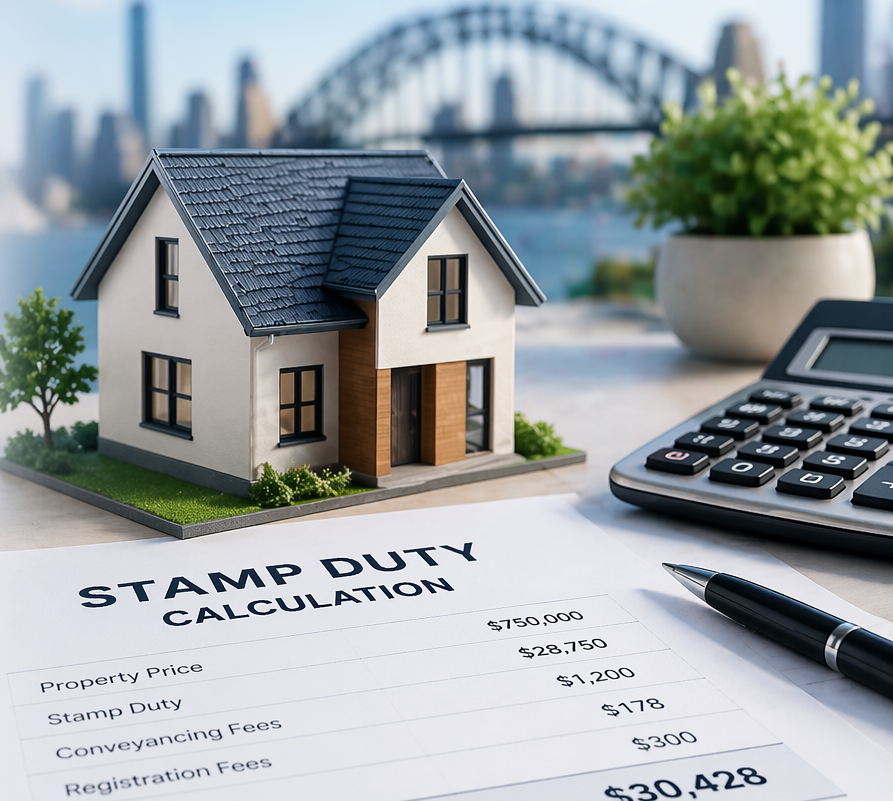
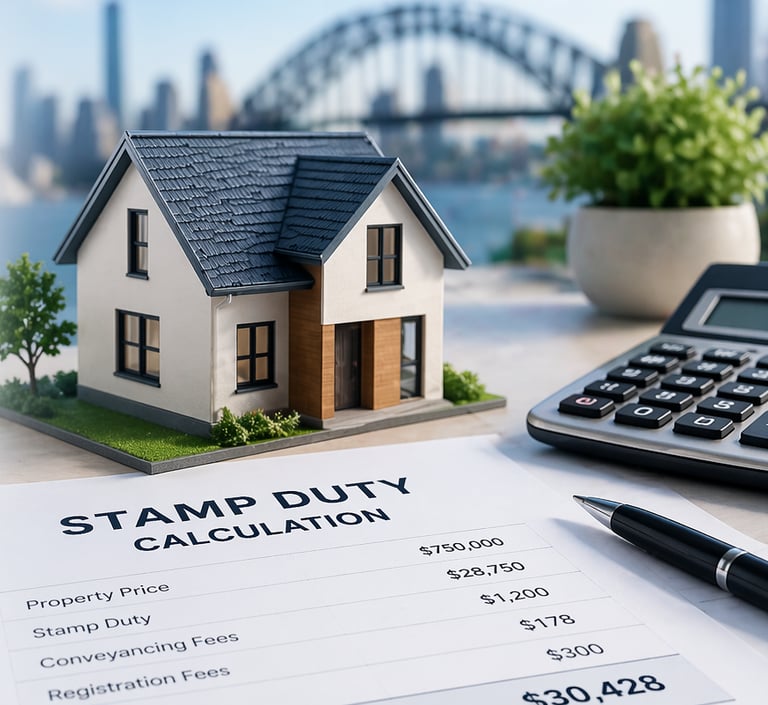
Estimate Your Upfront Costs
Stamp duty and buying costs made clearer
What is Stamp Duty in Australia?
Stamp duty, also known as transfer duty or land transfer duty, is a state or territory tax that may apply when you buy or acquire property in Australia.
The amount you pay can depend on:
the property value
the state or territory
the type and use of the property
whether you qualify for any concessions or exemptions
your buyer status, including whether you are a first-home buyer or foreign purchaser
Each Australian state and territory sets its own duty rates, thresholds and eligibility rules. This means two properties with the same purchase price can attract different amounts of stamp duty depending on where they are located.
Payment deadlines also vary by jurisdiction and transaction type. Your solicitor or conveyancer can usually help confirm the amount payable and when it is due.
Once you have estimated your stamp duty, use our Mortgage Calculator to estimate your potential home loan repayments.
Stamp Duty Rates by Australian State and Territory
Stamp duty rules vary across Australia. Each state and territory sets its own rates, thresholds, exemptions and concessions, so the amount payable can differ significantly depending on where you buy.
New South Wales (NSW)
Known as transfer duty in NSW. The amount generally depends on the property's dutiable value. Eligible first-home buyers may qualify for exemptions or concessional rates.
Victoria (VIC)
Victoria refers to stamp duty as land transfer duty. Rates vary according to the property's dutiable value and circumstances such as whether it will be your principal place of residence. First-home buyer concessions may also apply.
Queensland (QLD)
Queensland charges transfer duty on property transactions. The amount can depend on the property value, how the property will be used and whether the buyer qualifies for a concession or exemption.
Western Australia (WA)
Western Australia charges transfer duty when property is acquired. Eligible first-home buyers may qualify for concessional rates or exemptions depending on current eligibility requirements.
South Australia (SA)
South Australia charges stamp duty on property transfers. Eligible first-home buyers purchasing certain new homes or vacant land may qualify for stamp duty relief, subject to current eligibility requirements.
Tasmania (TAS)
Tasmania charges property transfer duty. Rates are generally based on the property's dutiable value, while concessions or exemptions may be available for eligible transactions.
Australian Capital Territory (ACT)
The ACT refers to stamp duty as conveyance duty. Eligible buyers may qualify for concessions or exemptions under current home-buyer assistance schemes.
Northern Territory (NT)
The Northern Territory charges stamp duty on certain property transactions. Available concessions, exemptions and assistance depend on the buyer and transaction.
Important: Stamp duty rates, thresholds, exemptions and concessions can change. This calculator provides a general estimate only. Always confirm the amount payable with the relevant state or territory revenue authority, solicitor or conveyancer before purchasing property.
Frequently Asked Questions
1. What is stamp duty in Australia?
Stamp duty, also called transfer duty or land transfer duty, is a tax that may apply when you purchase or acquire property in Australia. Each state and territory sets its own rules and rates.
2. How is stamp duty calculated?
Stamp duty is generally calculated using the dutiable value of the property. The amount can also depend on the property's location, intended use, buyer circumstances and any concessions or exemptions available.
3. Do first-home buyers have to pay stamp duty?
Not always. Some states and territories provide stamp duty exemptions or concessions for eligible first-home buyers. Eligibility requirements, property limits and available benefits vary by location and can change over time.
4. Is stamp duty the same in every Australian state?
No. Each Australian state and territory has its own rates, thresholds, concessions and exemptions, so the duty on a property of the same value can differ depending on its location.
5. When do I have to pay stamp duty?
Payment deadlines vary depending on the state or territory and type of property transaction. Your solicitor or conveyancer can help determine the applicable deadline for your purchase.
6. Is stamp duty based on the purchase price or property value?
Generally, duty is calculated using the property's dutiable value, which may be based on the purchase price, market value or another value determined under the relevant jurisdiction's rules.
7. Does this Stamp Duty Calculator include first-home buyer concessions?
The calculator provides a general stamp duty estimate and does not automatically include every first-home buyer concession, exemption, foreign-buyer surcharge or other special rate. Check the applicable government rules before relying on an estimate.
8. Is the Stamp Duty Calculator exact?
No. The calculator is designed to provide a general estimate for planning purposes. Stamp duty rules can change, and your circumstances may affect the final amount. Confirm the actual duty payable with the relevant state or territory revenue authority, solicitor or conveyancer.
Plan Your Full Home Buying Budget Before You Search
Stamp duty is only one part of the cost of buying a home. Your deposit, loan repayments, upfront buying costs and ongoing expenses all affect how much you may need and what property you can realistically afford.
Use the Stamp Duty Calculator above to estimate your potential duty, then explore these free calculators to build a clearer picture of your home-buying budget:
→ Mortgage Calculator — Estimate your monthly repayments and total interest.
→ Borrowing Power Calculator — Estimate how much you may be able to borrow based on your income, expenses and existing debts.
→ House Affordability Calculator — Estimate what property price may fit your budget based on your deposit and finances.
Planning these costs together can help you set a more realistic property budget before you start house hunting.
Smart Financial Calculators
Tools designed to help you make clear financial decisions daily.
Personal Loans
Estimate repayments, interest, and total costs before you borrow.
Track your balance, reduce interest, and pay off your debt faster.
Credit Cards




Car Loans
Calculate your monthly car payments and plan your budget with confidence.


ClearEveryday
Free financial calculators and practical money tools for everyday decisions.
Plan your budget, manage debt, build savings, explore investing and understand your money — with simple tools and no sign-up required.
Link
© ClearEveryday 2026. All rights reserved.
About
“For informational purposes only — not financial advice.”