Free tools • Instant results • No signup

Use our free Emergency Fund Calculator to estimate how much you may need to save for unexpected expenses based on your monthly costs and desired coverage.
Emergency Fund Calculator
How to use this Emergency Fund Calculator
Enter four simple details to estimate your emergency fund target:
1. Monthly essential expenses
Include necessities such as housing, food, utilities, transport and insurance.
2. Current emergency savings
Enter the amount you already have available for unexpected expenses.
3. Monthly savings contribution
Enter how much you can realistically add to your emergency fund each month.
4. Coverage goal
Choose how many months of essential expenses you want your emergency fund to cover.
3 months — a smaller starting buffer
6 months — a common emergency fund target
9–12 months — a larger financial cushion
5. Review your results
The calculator will show your target emergency fund, current progress, amount still needed, estimated time to reach your goal, and how many months of expenses your current savings could cover.
💡 Tip: You don't have to build your entire emergency fund at once. Start with a smaller milestone and build from there.
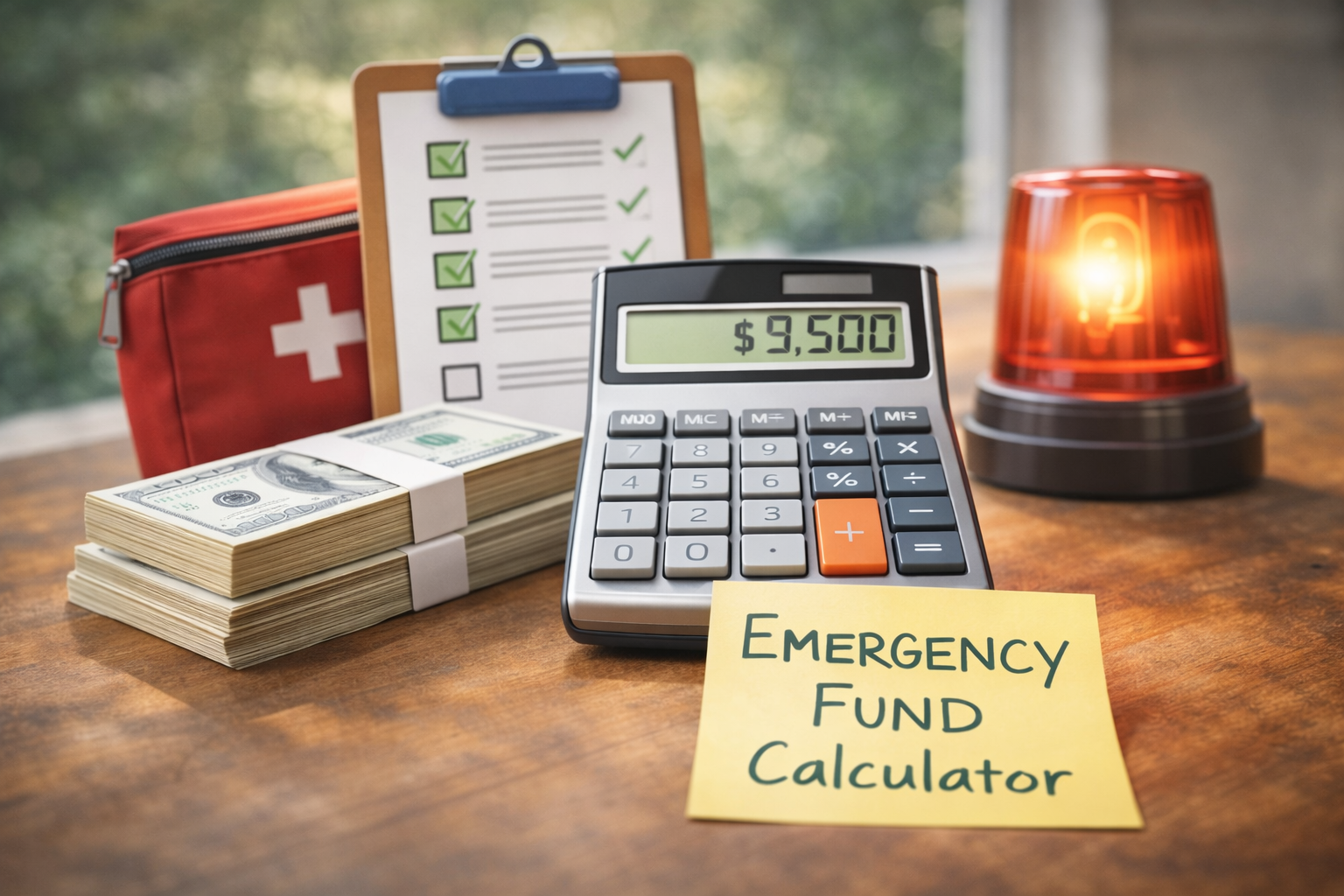
An emergency fund is money set aside for unexpected and necessary expenses. It provides a financial buffer so you may be less likely to rely on credit cards or loans when something unexpected happens.
What Can an Emergency Fund Be Used For?
Emergency savings are generally intended for unexpected expenses such as:
Medical or dental costs
Urgent car repairs
Job loss or reduced income
Essential home repairs
Unexpected travel or family emergencies
Essential living expenses during a financial setback
It is generally separate from savings for planned expenses such as holidays, entertainment or major purchases.
How Much Should You Save?
A commonly used starting point is 3 to 6 months of essential living expenses, although the right amount depends on your circumstances.
3 months — a smaller financial buffer
6 months — a larger buffer for unexpected expenses
9–12 months — may provide additional protection for people with irregular or less predictable income
You don't need to reach your full target immediately. Building a smaller emergency fund first and gradually increasing it can still provide useful protection.
Why Is an Emergency Fund Important?
An unexpected expense can disrupt your budget and potentially lead to new debt. An emergency fund can provide:
A financial safety net
Less reliance on high-interest debt
More flexibility when income changes
Greater ability to handle unexpected expenses
💡 Simple way to think about it:
Your emergency fund isn't everyday spending money. It's a financial buffer for expenses you didn't plan for.
What Is an Emergency Fund?
What Counts as Essential Expenses
When calculating your emergency fund, focus on your essential living expenses — the costs you would still need to cover if your income were reduced or temporarily stopped.
Common essential expenses include:
Rent or mortgage payments
Groceries and basic household supplies
Utilities such as electricity, water and gas
Essential internet and phone costs
Insurance premiums
Transport costs such as fuel or public transport
Minimum debt repayments
Essential medical expenses
Childcare or other necessary family expenses
Expenses you may be able to reduce or exclude:
Dining out and takeaway
Entertainment
Non-essential subscriptions
Discretionary shopping
Holidays and leisure travel
Other optional spending
💡 Tip: Focus on the expenses you would need to maintain your household and meet your financial obligations during an emergency. This gives you a more realistic emergency fund target.
How Much Emergency Fund Do You Need?
The right emergency fund amount depends on your income, household and financial commitments. A common starting point is to save several months of essential expenses.
3 months → May suit people with stable income and fewer financial commitments.
6 months → A commonly used target that provides a larger financial buffer.
9–12 months → May be worth considering if your income is irregular, you are self-employed, have dependants, or rely on a single household income.
You don't necessarily need to reach your full target immediately. Building a smaller emergency fund first and gradually increasing it can still provide valuable protection against unexpected expenses.
💡 Tip: Use the Emergency Fund Calculator above to compare different coverage periods and see how much you may need based on your own monthly essential expenses.

Frequently asked questions
1. How much should I have in an emergency fund?
A common guideline is to build enough to cover 3 to 6 months of essential expenses. You may prefer a larger buffer if your income is irregular, you are self-employed, have dependants, or rely on one household income.
2. Is $1,000 enough for an emergency fund?
$1,000 can be a useful starting point and may help cover smaller unexpected expenses, but it may not be enough for a major emergency or extended loss of income. You can start small and gradually build toward your longer-term target.
3. What expenses should an emergency fund cover?
An emergency fund is generally intended for necessary, unexpected expenses such as urgent car or home repairs, medical costs, essential bills during a loss of income, and other financial emergencies.
4. Where should I keep my emergency fund?
Consider keeping your emergency fund somewhere safe, easily accessible and separate from your everyday spending money. Many people use a savings account so the money can be accessed quickly when needed.
5. Should I save an emergency fund or pay off debt first?
It can be helpful to build a small emergency buffer while making required debt repayments. This may reduce the chance of needing to borrow again when an unexpected expense occurs. Your best approach will depend on your debts, interest rates and financial circumstances.
6. How long does it take to build an emergency fund?
That depends on your target, current savings and how much you can contribute regularly. For example, if you need another $6,000 and save $500 per month, it would take approximately 12 months to reach the target, assuming no withdrawals.
7. Should I include my emergency fund in my regular savings?
It is usually easier to track an emergency fund when it is kept separate from money intended for holidays, purchases or other savings goals. This can also make it less tempting to spend the money on non-emergencies.
8. When should I use my emergency fund?
Consider using it for necessary, unexpected and urgent expenses that you cannot comfortably cover from your regular income. After using some of the fund, you can gradually rebuild it so the buffer is available for the next unexpected expense.
Related Savings & Money Calculators
Explore other free tools to help plan your savings, budget and financial goals.
Helpful Emergency Fund & Savings Guides
Learn more about building a financial buffer, saving consistently and managing unexpected expenses.
How to Save Your First $1,000 Even on a Tight Budget →
Emergency Fund vs Paying Off Debt: Which Should You Do First? →
How to Set a Realistic Savings Goal (Without Feeling Overwhelmed) →
Stop Living Paycheck to Paycheck: 10 Practical Changes That Actually Help →
Smart Financial Calculators
Tools designed to help you make clear financial decisions daily.
Personal Loans
Estimate repayments, interest, and total costs before you borrow.
Track your balance, reduce interest, and pay off your debt faster.
Credit Cards



Car Loans
Calculate your monthly car payments and plan your budget with confidence.


ClearEveryday
Free financial calculators and practical money tools for everyday decisions.
Plan your budget, manage debt, build savings, explore investing and understand your money — with simple tools and no sign-up required.
Link
© ClearEveryday 2026. All rights reserved.
About
“For informational purposes only — not financial advice.”