Free tools • Instant results • No signup

What Is Inflation and Why Should You Actually Care?
What is inflation in simple terms? Learn what causes it, how it affects your everyday spending, and why understanding inflation is the first step to protecting your money.
SAVINGS & BUDGETING
Rachel
5/5/20267 min read


You've probably heard the word inflation thrown around on the news, in political debates, or maybe at the grocery store checkout when your usual weekly shop suddenly costs $20 more than it did last year.
But what does inflation actually mean? And more importantly — why should you, as someone just trying to manage their money sensibly, actually care about it?
This post explains it all in plain English. No economics degree required.
What Is Inflation, Simply Put?
Inflation is the gradual rise in the price of things over time.
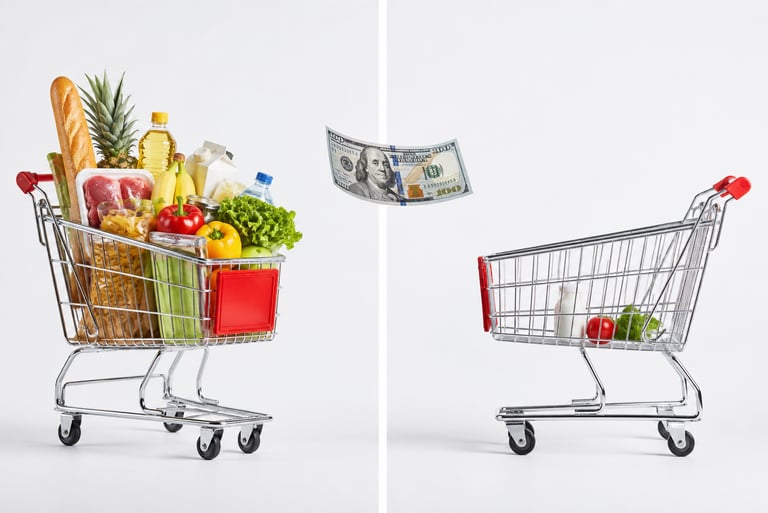
That's it. When inflation is happening, the same amount of money buys you less than it did before. A coffee that cost $3 five years ago might cost $4.50 today. A weekly grocery shop that cost $150 a few years ago might now run you $190. Your rent has gone up. Your electricity bill has gone up. Almost everything has gone up.
That process — prices rising steadily over time — is inflation.
The flip side of rising prices is that the value of your money is falling. A $50 note today will not buy the same things in ten years that it buys today. The number printed on the note never changes, but what it can actually buy does. This is called purchasing power — and inflation quietly erodes it every single year.
A Simple Everyday Example
Imagine you put $1,000 in a box under your bed today and forgot about it for 20 years.
When you open the box, you still have $1,000. The notes look the same. But at an average inflation rate of 3.5% per year, that $1,000 would only have the purchasing power of around $503 in today's money.
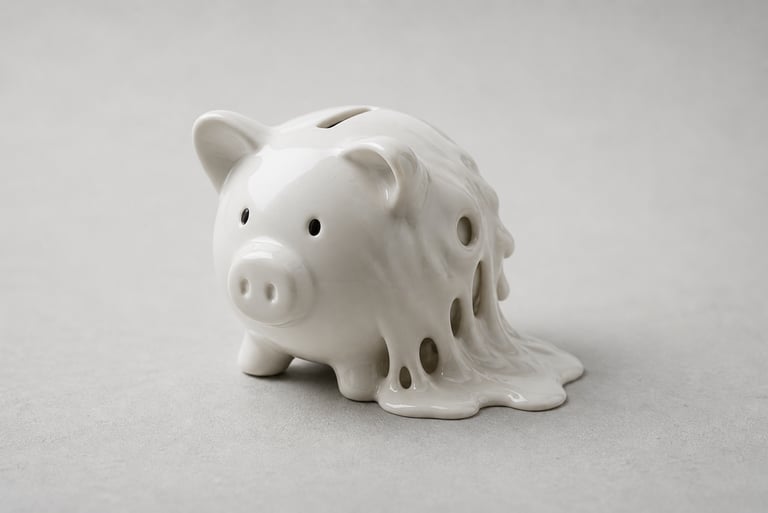
You didn't lose any notes. But you lost nearly half your money's real value — simply by doing nothing.
This is why understanding inflation matters so much. It is always running in the background, whether you think about it or not.
How Is Inflation Measured?
Governments and central banks track inflation using something called the Consumer Price Index, or CPI.
The CPI works by monitoring the prices of a large basket of goods and services that ordinary households typically buy — things like food, housing, transport, clothing, healthcare, and entertainment. Every month, statisticians check whether those prices have gone up or down compared to the previous period.
When we say inflation is running at 3.5%, it means that on average, that basket of goods costs 3.5% more than it did a year ago.
In the United States, the Bureau of Labor Statistics (BLS) publishes CPI data every month. The Federal Reserve also watches a separate measure called the Personal Consumption Expenditures (PCE) index, which it uses to guide interest rate decisions.
In Australia, the Australian Bureau of Statistics (ABS) publishes quarterly CPI figures. In the UK, it's the Office for National Statistics (ONS).
Different countries measure it slightly differently, but the core concept is the same — tracking how much more expensive everyday life is getting.
What Causes Inflation?
Inflation doesn't just happen randomly. There are several well-understood causes:
1. Too much demand When lots of people want to buy the same things and supply can't keep up, sellers can charge more. This is called demand-pull inflation. Think of what happened to used car prices during the COVID-19 pandemic — huge demand, very low supply, prices shot up fast.
2. Rising production costs When it costs businesses more to make or deliver their products — because raw materials, energy, or wages have gone up — they pass those costs on to customers. This is called cost-push inflation. When oil prices spike, for example, it raises costs across almost every industry because everything needs to be transported.
3. Too much money in circulation When governments print a lot of new money — as many did during the pandemic through stimulus programs — there is more money chasing the same amount of goods. This can push prices up. It's a simplified version of the old saying: when money becomes more common, each unit is worth a little less.
4. Supply chain disruptions When global supply chains break down — as happened dramatically in 2020 and 2021 — goods become scarce, and scarce goods cost more. Shipping delays, factory shutdowns, and border closures all contributed to the inflation surge seen in 2021 and 2022.
5. Expectations This one surprises people. If businesses and workers expect prices to rise, they behave in ways that actually cause prices to rise — workers demand higher wages, businesses raise prices pre-emptively. Expectations themselves can become self-fulfilling, which is one reason central banks work hard to keep inflation expectations anchored.
Is All Inflation Bad?
This is where a lot of people get surprised — no, not all inflation is bad.
A small, stable amount of inflation is actually considered a sign of a healthy, growing economy. Most central banks around the world target around 2% annual inflation as their goal. A little inflation encourages people and businesses to spend and invest rather than hoard cash, because money sitting idle loses value over time.
The problems start when inflation gets too high or too unpredictable:
High inflation — like the 7–9% seen in the US and UK in 2022 — erodes purchasing power fast, squeezes household budgets, and makes it harder for businesses to plan.
Deflation (the opposite of inflation, where prices fall) sounds appealing but is actually dangerous. When people expect prices to keep falling, they delay spending, businesses lose revenue, unemployment rises, and economies can spiral into recession. Japan struggled with deflation for decades.
Hyperinflation is the extreme end — prices rising hundreds or thousands of percent per year. This destroys economies entirely. Zimbabwe experienced hyperinflation so severe in the late 2000s that prices were doubling every day.
So the sweet spot is low, stable, predictable inflation — enough to keep the economy moving, not so much that it burns through your savings.
How Does Inflation Affect You Personally?
Let's make this concrete. Here are the ways inflation touches your life whether you realise it or not:
Your groceries cost more Food prices are one of the most visible and immediate ways people feel inflation. When wheat, fuel, or packaging costs rise, food manufacturers and supermarkets pass those costs on quickly.
Your rent goes up Landlords adjust rents in line with — or faster than — inflation. If your income doesn't keep pace, your housing costs eat a bigger share of your budget each year.
Your salary buys less If you get a 2% pay rise but inflation is running at 4%, you've effectively received a pay cut in real terms. Your nominal salary went up but your purchasing power went down.
Your savings lose value Money sitting in a savings account earning 0.5% while inflation runs at 3% is losing real value every year. The number in your account goes up slightly, but what you can buy with it goes down.
Your debt becomes cheaper to repay Here's one case where inflation actually helps regular people. If you have a fixed-rate mortgage, inflation effectively makes your debt cheaper over time — because you're repaying it with money that is worth slightly less than when you borrowed it. This is one reason why homeowners often do better during inflationary periods than renters.
Retirement income gets squeezed Retirees on fixed pensions are among the most vulnerable to inflation. Their income doesn't change but everything around them gets more expensive, year after year.
What Is a "Normal" Inflation Rate?
Over the long run, developed economies like the US, UK, Canada, and Australia have averaged around 2–3% annual inflation. Central banks generally target 2% as their benchmark.
Here is a rough guide to how to interpret different inflation rates:
The US hit around 9.1% in June 2022 — the highest in 40 years — before the Federal Reserve aggressively raised interest rates to bring it back down. By 2024, it had fallen back to around 3%.
How Do Governments Fight Inflation?
The main tool used to fight inflation is interest rates.
When inflation is too high, central banks raise interest rates. Higher rates make borrowing more expensive — mortgages, car loans, and business loans all cost more. This slows down spending and investment, which reduces demand, which brings prices down.
It's a blunt instrument. Raising rates too fast or too high can tip an economy into recession. Getting the balance right is one of the hardest jobs in economic policy, which is why central bank decisions are watched so closely by markets, businesses, and governments around the world.
Other tools include reducing government spending and, in extreme cases, directly controlling prices — though price controls are generally seen as a last resort and often create their own problems.
What Can You Do About It?
You can't control inflation. But you can make decisions that protect your purchasing power:
Don't leave large amounts of money idle in low-yield accounts. If your savings rate is below inflation, you are losing real value every year.
Invest in assets that historically outpace inflation — broadly diversified index funds have averaged around 7–10% annually over the long run, well above typical inflation.
Negotiate your salary regularly — at minimum, aim for cost-of-living increases that match inflation.
Lock in fixed rates where possible — fixed-rate mortgages protect you when rates rise.
Understand your spending — knowing which categories of your budget are rising fastest helps you make smarter decisions about where to cut or adjust.
The single most powerful thing you can do is understand inflation clearly — because most of its damage comes from people simply not noticing it until it's already done.
See It For Yourself
Numbers on a page only tell part of the story. The best way to truly feel the impact of inflation is to run the numbers on your own money.
Use our free Inflation Impact Calculator to enter any amount — your savings, your monthly income, your pension — and see exactly what it will be worth in 5, 10, or 20 years at different inflation rates.
👉 Try the Inflation Impact Calculator here
The results have a way of making everything in this post feel very real, very fast.
The Bottom Line
Inflation is not just an economics concept for textbooks and news segments. It is a real, constant force that affects every dollar you earn, save, and spend.
At its most basic — inflation means your money buys less over time. The longer you ignore it, the more it costs you.
Understanding it is the first step. What you do with that understanding is what separates people who build financial security from those who wonder where their money went.
Found this useful? Share it with someone who's been confused by inflation talk lately — this is the post that finally makes it click.
Related Link:
ClearEveryday
Free financial calculators and practical money tools for everyday decisions.
Plan your budget, manage debt, build savings, explore investing and understand your money — with simple tools and no sign-up required.
Link
© ClearEveryday 2026. All rights reserved.
About
“For informational purposes only — not financial advice.”