Free tools • Instant results • No signup
What Happens When You Pay Off a Loan Early
Paying off a loan early can save you money and reduce financial stress—but are there any downsides? Here’s everything you need to know.
LOAN CALCULATORS
Rachel
4/2/20262 min read

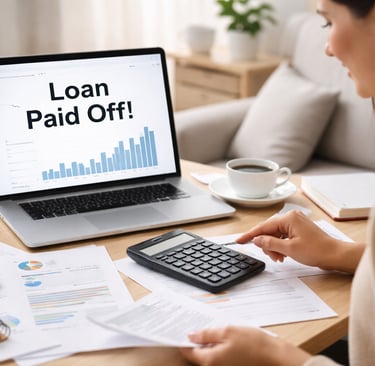
Paying off a loan early sounds like a smart move—and in most cases, it is. Becoming debt-free sooner can save you money on interest and give you peace of mind.
But before you rush to make that final payment, it’s important to understand what actually happens when you pay off a loan early, including the benefits, potential drawbacks, and when it makes sense.
What Does Paying Off a Loan Early Mean?
Paying off a loan early means clearing your remaining balance before the scheduled end date of your loan term.
This can be done by:
Making extra payments
Paying a lump sum
Using a 10-day payoff amount to fully close the loan
What Happens When You Pay It Off?
1. You Save Money on Interest 💰
The biggest benefit is interest savings.
Loans charge interest over time—so the faster you pay it off:
The less interest you pay
The more money you keep
👉 This is especially important for high-interest loans like credit cards.
2. Your Debt Is Fully Cleared
Once paid off:
Your loan balance becomes $0
The account is marked as closed or paid in full
This is a major step toward financial freedom.
3. Your Credit Score May Change
Paying off a loan can impact your credit score:
Positive effects:
Lower debt levels
Better debt-to-income ratio
Possible short-term drop:
Closing an account can reduce your credit history length
👉 Overall, it’s usually positive long-term
4. You Free Up Monthly Cash
Once the loan is gone:
No more monthly payments
More money for saving, investing, or spending
5. You Might Pay Fees (Sometimes)
Some loans include early repayment penalties.
These fees:
Are more common in mortgages or fixed-term loans
May reduce your savings
👉 Always check your loan terms before paying early
Example: Early Payoff Savings
Let’s say:
Loan: $10,000
Interest rate: 10%
Remaining term: 3 years
If you pay it off today:
You avoid hundreds (or even thousands) in future interest
Use a 10-Day Payoff Calculator
Before paying off your loan, you need the exact amount required.
👉 That’s where a 10-day payoff calculator helps:
Includes your balance
Adds interest for the next 10 days
Gives you the final payoff amount
This ensures you don’t underpay or leave a remaining balance.
When Paying Early Might Not Be Ideal
Paying off a loan early isn’t always the best move if:
You have higher-interest debt elsewhere
There are large prepayment penalties
You don’t have an emergency fund
👉 In these cases, it may be better to prioritize differently.
Final Thoughts
Paying off a loan early is one of the fastest ways to:
Save money
Reduce stress
Gain financial freedom
But always:
Check for fees
Calculate your payoff amount
Make sure it fits your overall financial plan
👉 Paying off a loan early is usually a smart financial move—
as long as you understand the costs and plan it properly.
👉 Want to know your exact payoff amount? Try our 10-Day Payoff Calculator.
ClearEveryday
Free financial calculators and practical money tools for everyday decisions.
Plan your budget, manage debt, build savings, explore investing and understand your money — with simple tools and no sign-up required.
Link
© ClearEveryday 2026. All rights reserved.
About
“For informational purposes only — not financial advice.”