Free tools • Instant results • No signup

Struggling With Multiple Credit Cards? Here's Exactly What to Pay First
Struggling with multiple credit cards and don't know what to pay first? Learn the snowball and avalanche methods, see real examples, and use free calculators to build your payoff plan today.
CREDIT CARD STRATEGIES
Rachel
4/18/20265 min read
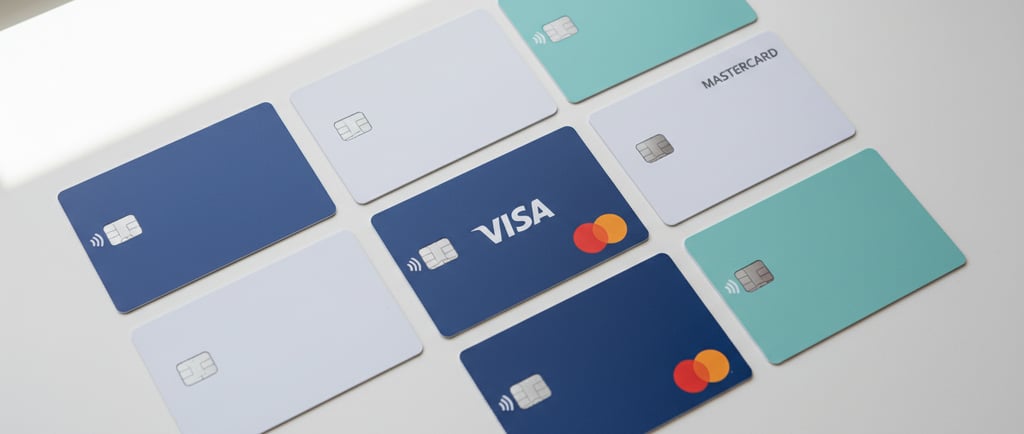

If you've ever stared at three or four credit card statements and thought "where do I even start?" — you're not alone. This is one of the most common and most stressful money situations people face. You want to do the right thing, but every card has a different balance, a different interest rate, and a different minimum payment. It feels impossible to know where to begin.
The good news? There's a clear answer. And once you understand it, the overwhelm starts to lift.
First: Always Pay the Minimum on Every Card
Before we talk strategy, there's one rule that applies no matter what: always pay at least the minimum on every single card, every single month — without exception.
Missing a payment triggers late fees, penalty interest rates, and a hit to your credit score. None of those things help you. So step one is making sure all your cards are current, even if you're only paying the bare minimum on most of them.
Not sure what your minimums are costing you? Use the Credit Card Minimum Payment Calculator at ClearEveryday.com to see exactly how long it will take to pay off each card at minimum payments — and how much interest you'll pay along the way. The numbers are often shocking, and that's exactly the motivation you need to do more than the minimum.
Now: Choose Your Strategy
Once your minimums are covered, you have extra money to throw at debt. The question is — which card gets it?
There are two proven methods, and both work. The right one depends on your personality.
Method 1: The Avalanche Method (Pay Less Interest Overall)
With the avalanche method, you put all your extra money toward the card with the highest interest rate first — regardless of the balance.
Here's why this makes mathematical sense: high-interest debt grows the fastest. Every month you leave a balance on a 22% APR card, you're losing more money than you would on a 14% APR card. Attack the most expensive debt first and you'll pay less interest over time.
Example:
Card A: $2,000 balance at 22% APR
Card B: $4,500 balance at 16% APR
Card C: $800 balance at 12% APR
With the avalanche method, you'd focus all extra payments on Card A first. Once Card A is gone, move that money to Card B. Then Card C.
This method saves the most money. If you're disciplined and motivated by numbers, this is your strategy.
Use the Credit Card Payoff Calculator at ClearEveryday.com to run your numbers for each card and see exactly how long each one will take to pay off — and how much interest you'll save by paying more than the minimum.
Method 2: The Snowball Method (Pay Less Cards Faster)
With the snowball method, you ignore interest rates entirely and focus on the card with the smallest balance first.
The idea is psychological. Paying off a whole card — even a small one — gives you a genuine win. That win builds momentum. You feel progress. You stay motivated. You keep going.
Using the same example:
Card A: $2,000 balance at 22% APR
Card B: $4,500 balance at 16% APR
Card C: $800 balance at 12% APR
With the snowball method, you'd focus on Card C first. It's the smallest — you could knock it out in a few months. Then move to Card A. Then Card B.
Research actually backs this up. People who use the snowball method are more likely to stick with their debt payoff plan because the early wins keep them going.
If you've tried to pay off debt before and lost motivation halfway through — snowball might be your answer.
Which Method Should You Choose?
Here's the honest answer: the best method is the one you'll actually stick with.
If you're motivated by saving money and you trust the process even when it feels slow — go avalanche.
If you need to feel wins along the way to stay on track — go snowball.
Either way, you'll get out of debt. The worst thing you can do is spend so long deciding that you do nothing at all.
A good middle ground: use the avalanche method on paper, but if your highest-interest card also happens to have a large balance that feels impossible to chip away at, give yourself permission to knock out one small card first to get momentum. Then switch to avalanche. There are no debt police — do what keeps you moving.
What About Balance Transfers and Consolidation?
If you're juggling multiple cards with high interest rates, it's worth looking at whether consolidating your debt could help.
A balance transfer card with a 0% introductory period can give you 12 to 21 months of interest-free time to pay down your balance aggressively. A personal loan at a lower interest rate than your cards can also simplify multiple payments into one.
Before you go that route, use the Debt Consolidation Calculator at ClearEveryday.com to see whether consolidating actually saves you money in your situation — because it doesn't always, and you need to see the real numbers first.
A Simple Step-by-Step Plan to Start Today
Here's a straightforward action plan you can follow right now:
Step 1 — List all your credit cards. Write down the balance, interest rate, and minimum payment for each one.
Step 2 — Run each card through the Minimum Payment Calculator to see the true cost of only paying minimums. Let that sink in.
Step 3 — Decide on your method — avalanche or snowball.
Step 4 — Use the Credit Card Payoff Calculator to set a target payoff date for your first card. Make it realistic but ambitious.
Step 5 — Set up automatic minimum payments on all cards so you never miss one. Then manually pay extra on your target card each month.
Step 6 — When one card is paid off, don't lifestyle creep that money away. Stack it onto the next card immediately. This is the magic of the method — your payments snowball or avalanche naturally.
How Much Does Paying Extra Actually Help?
This is the part that changes people's minds.
Say you have a $3,500 balance at 20% interest and your minimum payment is $70 a month. At that rate, it will take you over 20 years to pay it off — and you'll pay more in interest than you originally spent.
Now increase that payment to $150 a month. Suddenly you're debt-free in about 2.5 years and you save thousands in interest.
That's not a small difference. That's life-changing.
Run your own numbers with the Credit Card Payoff Calculator at ClearEveryday.com. Try different monthly payment amounts and watch how dramatically the payoff date and interest total change. It's one of the most motivating things you can do when you're feeling stuck.
The Bottom Line
Managing multiple credit cards feels overwhelming — until you have a system. The moment you stop looking at all your debt as one giant scary number and start treating each card as a separate problem to solve one at a time, everything becomes more manageable.
You don't need to be perfect. You just need to start.
Pick your method. Run your numbers. Make one extra payment this month. Then do it again next month.
That's how debt gets paid off — not in one dramatic moment, but in consistent small decisions that add up over time.
Free Calculators to Help You Right Now:
👉 See what minimum payments are really costing you — Credit Card Minimum Payment Calculator
👉 Find your payoff date and set a goal — Credit Card Payoff Calculator
👉 See if consolidating your debt makes sense — Debt Consolidation Calculator
👉 Track all your debt in one place — Debt Payoff Calculator
ClearEveryday builds free, no-signup financial calculators to help you understand your money and make smarter decisions every day.
ClearEveryday
Free financial calculators and practical money tools for everyday decisions.
Plan your budget, manage debt, build savings, explore investing and understand your money — with simple tools and no sign-up required.
Link
© ClearEveryday 2026. All rights reserved.
About
“For informational purposes only — not financial advice.”