Free tools • Instant results • No signup

Is Your Emergency Fund “Inflation-Proof”? Why $1,000 Isn’t Enough in 2026
Discover why a $1,000 emergency fund isn’t enough in 2026 and how to calculate a better savings target based on your real expenses.
Rachel
5/3/20263 min read
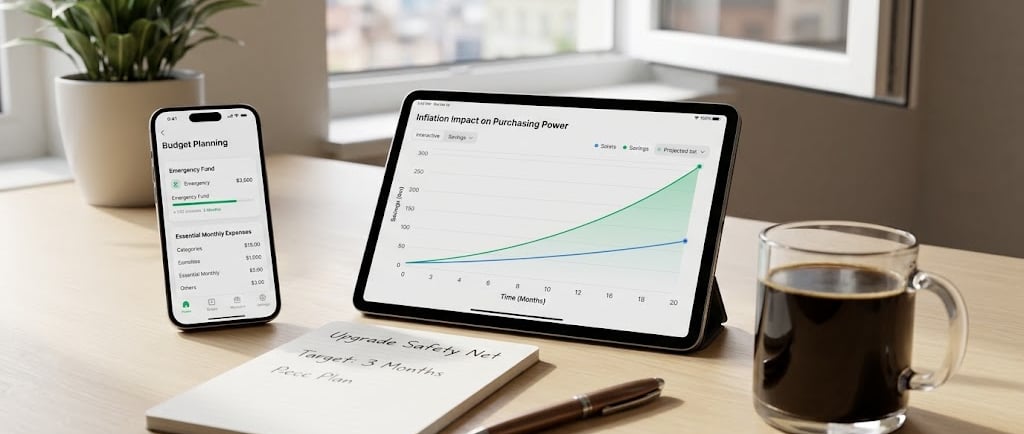
For years, the advice was simple: 👉 Save your first $1,000 emergency fund.
It was the “starting line” for financial stability.
But in 2026, things feel different.
Groceries cost more. Rent is higher. Even small repairs aren’t small anymore.
And that same $1,000? It doesn’t stretch the way it used to.
So if your emergency fund hasn’t grown with real life costs, you might be more exposed than you realise.
This isn’t about fear — it’s about being prepared in today’s reality.
1. The “Real Value” Gap
Inflation doesn’t just raise prices — it quietly shrinks your safety net.
Then vs Now
A few years ago:
$1,000 could cover:
A decent car repair
A full month of basic groceries
A small unexpected bill
In 2026:
That same $1,000 might only cover:
One major repair (especially newer cars)
Two weeks of essentials
Or part of a bigger emergency
What this means for you
Your emergency fund isn’t “wrong” — it’s just outdated.
👉 A better way to think about it:
Look at your last unexpected expense.
Was it $800?
$1,200?
$2,000?
That number is your new reality.
2. Calculate Your “New Base”
Instead of aiming for a random number like $1,000, base your fund on your actual living costs today.
A more realistic starting point in 2026 is:
👉 1 full month of essential expenses
This includes:
Rent or mortgage
Utilities and internet
Groceries (current prices, not old habits)
Insurance
Transport
💡Why this works better
Because emergencies don’t happen in isolation.
It’s rarely just: “One bill”
It’s usually: “One problem + your normal life still continuing”
✔ Simple step
If you’re not sure what your monthly essentials are:
👉 Use your Budget Planner Tool
Seeing your numbers clearly makes everything easier.
3. The Debt vs Savings Balancing Act
This is where it gets real.
If you’re working on:
You might feel like: “Every dollar should go to debt”
And that makes sense.
But here’s the problem:
👉 An emergency fund that’s too small is how people fall back into debt
Example
Emergency cost: $1,500
Your fund: $1,000
Gap: $500
That $500 usually goes onto:
👉 a credit card (high interest)
Now you’re back where you started.
💡 The 2026 approach
It’s okay to pause and adjust.
👉 Take a few weeks to “top up” your emergency fund
👉 Then go back to your debt plan
This isn’t going backwards — it’s protecting your progress.
4. Where to Keep Your Emergency Fund
In 2026, where you store your money matters more.
Keeping it in a normal account means:
👉 it slowly loses value over time
✔ Better option: High-Yield Savings Account (HYSA)
Look for something that is:
Liquid → You can access it within 24–48 hours
Separate → Not mixed with everyday spending
Earning interest → Helps offset inflation
💡 Keep it simple
You don’t need something complicated.
You just need your money to:
👉 stay safe
👉 stay accessible
👉 work a little for you
5. How to Build It Without Stress
If increasing your emergency fund feels overwhelming, start small.
You don’t need to jump from $1,000 to $5,000 overnight.
Try this instead
Add $20–$50 per week
Use extra income (refunds, side income, etc.)
Round up savings automatically
👉 Small steps still close the gap
6. What “Emergency” Actually Means
This is important — and often overlooked.
Your emergency fund is for:
Unexpected
Necessary
Urgent
✔ Real emergencies
Car repairs
Medical expenses
Job loss
Urgent home repairs
❌ Not emergencies
Sales or discounts
Upgrades
“I might need it” purchases
👉 Think of it as protection — not spending money.
FAQ: Quick Answers for 2026
Is $1,000 still a good starting point?
Yes — but it’s no longer enough long-term. It’s just your starting step.
Should I aim for 3 or 6 months of expenses?
3 months = minimum
6 months = safer (especially if income is unstable)
What if I can’t save more right now?
Start small. Even $20 a week adds up over time.
Should I stop paying debt to build this?
You don’t need to stop — but it’s okay to slow down temporarily to strengthen your safety net.
Final Thoughts
This isn’t about chasing bigger numbers.
It’s about matching your financial plan to today’s reality.
If your emergency fund hasn’t been updated in years, it’s worth taking a second look.
Not to stress yourself — but to give yourself more breathing room when life happens.
Rachel’s Note
Don’t let inflation make you feel behind. You’re not behind — the world just changed.
Adjusting your plan isn’t failure. It’s awareness.
And honestly, having a stronger emergency plan isn’t just about money — it’s about peace of mind.


ClearEveryday
Free financial calculators and practical money tools for everyday decisions.
Plan your budget, manage debt, build savings, explore investing and understand your money — with simple tools and no sign-up required.
Link
© ClearEveryday 2026. All rights reserved.
About
“For informational purposes only — not financial advice.”