Free tools • Instant results • No signup

How to Survive Rising Costs in 2026 (Even If You’re Living Paycheck to Paycheck)
The cost of living keeps going up — but for many people, income hasn’t. Groceries are more expensive. Petrol prices fluctuate. Rent and bills continue to rise. And for a lot of households, it feels like no matter how hard you try, there’s nothing left at the end of the month. If that sounds like you, you’re not alone. The good news is this: even in tough times, small changes can make a real difference. You don’t need to be perfect — you just need a clear plan.
Rachel
3/26/20262 min read
The cost of living keeps going up — but for many people, income hasn’t.
Groceries are more expensive. Petrol prices fluctuate. Rent and bills continue to rise. And for a lot of households, it feels like no matter how hard you try, there’s nothing left at the end of the month.
If that sounds like you, you’re not alone.
The good news is this: even in tough times, small changes can make a real difference. You don’t need to be perfect — you just need a clear plan.
Why It Feels So Hard Right Now
Many people aren’t overspending — they’re just dealing with higher costs everywhere.
Common pressure points:
Petrol and transport costs
Food and groceries
Rent or mortgage payments
Debt repayments
Unexpected expenses
When everything increases at once, it creates a constant financial squeeze.
Step 1: Know Where Your Money Is Going
Before you can fix anything, you need clarity.
Start by breaking your spending into categories:
Essentials (rent, food, bills)
Transport (petrol, public transport)
Debt (credit cards, loans)
Lifestyle (subscriptions, eating out)
👉 Use a simple budget calculator to see exactly where your money goes each month.
Step 2: Understand Your “Real” Monthly Costs
A lot of people underestimate how much they actually spend — especially on things like petrol or small daily purchases.
For example:
$15/day on food = $450/month
$80/week petrol = ~$320/month
That’s already $770 — and that’s just two categories.
👉 Use tools like:
Petrol Cost Calculator
Expense Tracker
These help you see the full picture instantly
Step 3: Build a Small Emergency Buffer
When money is tight, saving feels impossible.
But even a small buffer helps:
$10–$20 per week
$40–$80 per month
This protects you from:
Unexpected bills
Car repairs
Medical costs
👉 Try using an Emergency Fund Calculator to set a realistic goal.
Step 4: Reduce Pressure, Not Just Spending
Instead of cutting everything, focus on high-impact changes:
Easy wins:
Compare petrol prices before filling up
Reduce 1–2 subscriptions
Cook at home 2–3 more times per week
Plan shopping instead of impulse buying
Even small adjustments can free up $100–$300/month
💰 Quickly Calculate Your Monthly Payment
Before we break it down, you can calculate your exact repayment here:
👉 Use our Loan Repayment Calculator
👉 Try our Personal Loan Calculator
👉 Estimate with our Debt Payoff Calculator
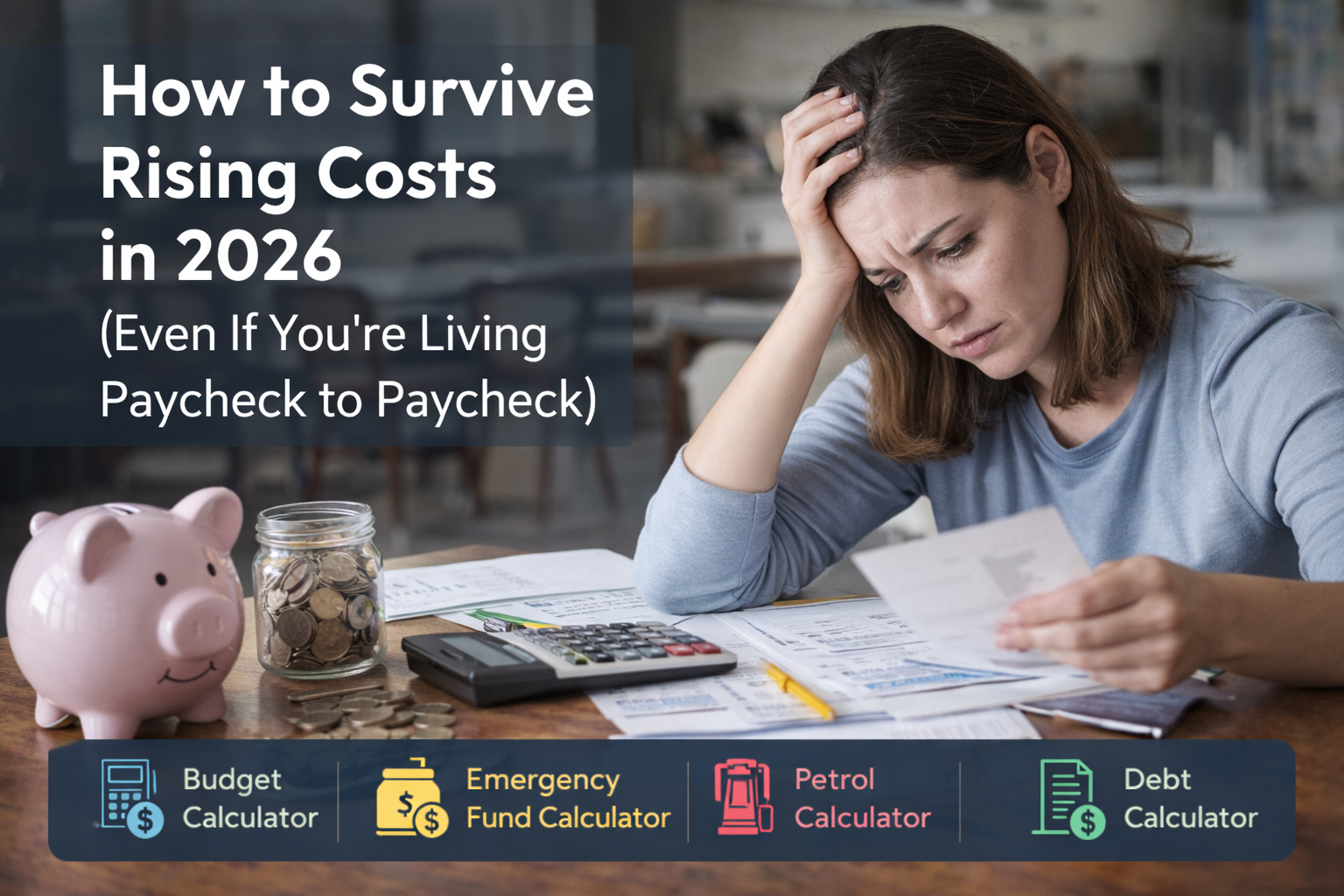

Step 5: Use Tools to Stay in Control
Guessing your finances creates stress.
Clarity creates control.
That’s why calculators matter — they turn confusion into clear numbers.
👉 Start here:
These tools help you:
Plan better
Reduce stress
Make smarter decisions
You Don’t Need to Be Perfect
You don’t need to:
Save hundreds overnight
Cut every expense
Have everything figured out
What matters is:
👉 understanding your numbers
👉 making small improvements
👉 staying consistent
Final Thoughts
Right now is tough — there’s no denying that.
But even in difficult times, taking control of your finances (step by step) can make a big difference.
Start small. Stay consistent. Use the tools available to you.
And most importantly — don’t give up.
ClearEveryday
Free financial calculators and practical money tools for everyday decisions.
Plan your budget, manage debt, build savings, explore investing and understand your money — with simple tools and no sign-up required.
Link
© ClearEveryday 2026. All rights reserved.
About
“For informational purposes only — not financial advice.”