Free tools • Instant results • No signup

How to Calculate Interest Easily (Simple Guide for 2026)
Learn how to calculate interest easily with simple formulas and examples. Understand simple and compound interest in this beginner-friendly 2026 guide.
LOAN CALCULATORS
Rachel
4/6/20262 min read
Understanding how interest works is one of the most important financial skills you can learn. Whether it’s a loan, credit card, or savings account, interest affects how much you earn—or owe.
This guide will show you simple ways to calculate interest easily, even if you’re not good at math.
What Is Interest?
Interest is the cost of borrowing money or the reward for saving money.
If you borrow → you pay interest
If you save → you earn interest
The Simple Interest Formula
The easiest way to calculate interest is using this formula:
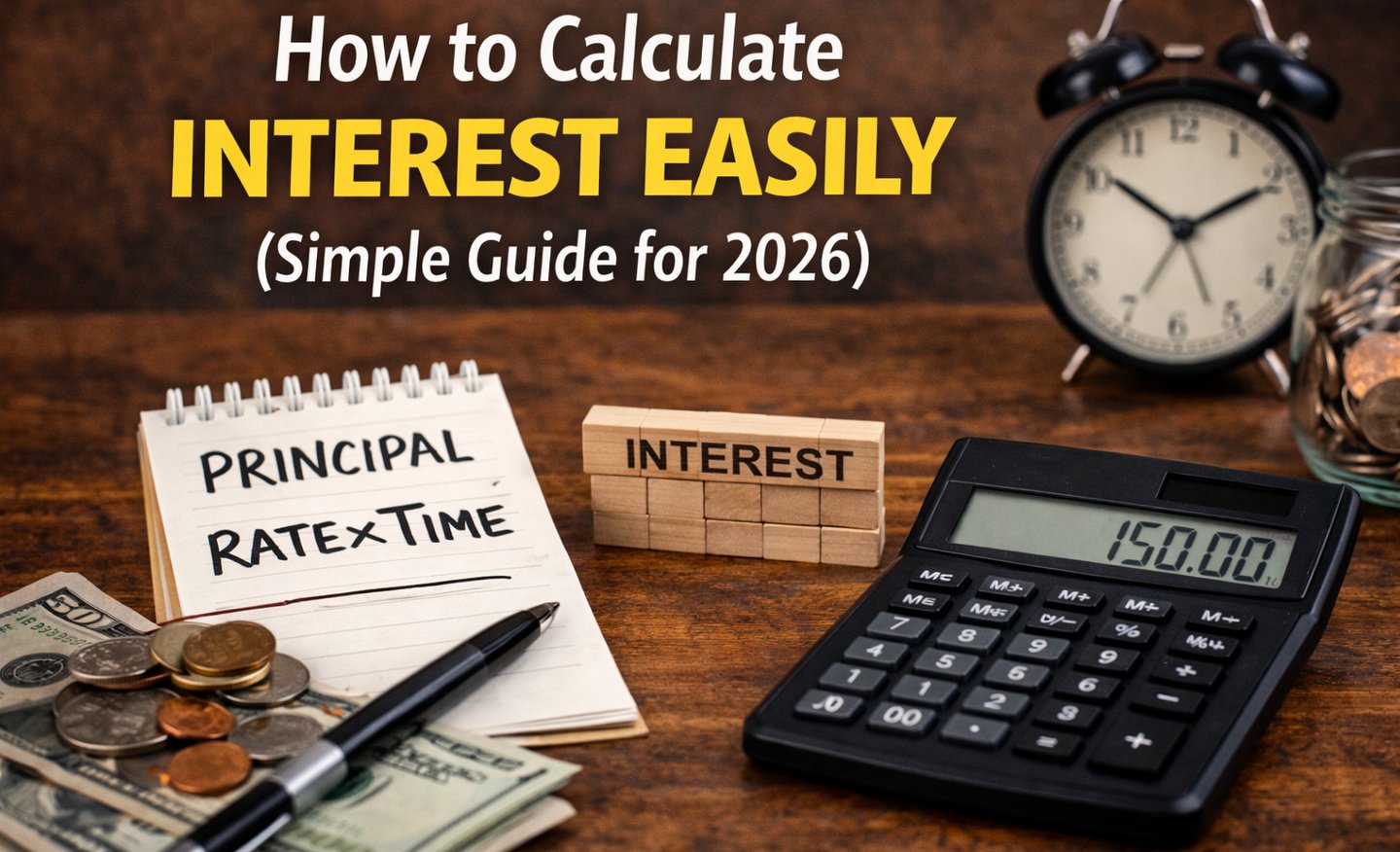
Interest = Principal × Rate × Time
Where:
Principal (P) = the amount of money
Rate (R) = interest rate (as a decimal)
Time (T) = how long (usually in years)
Example: Simple Interest
Let’s say:
You borrow $1,000
Interest rate = 5% (0.05)
Time = 1 year
👉 Interest = 1000 × 0.05 × 1 = $50
Total repayment = $1,050
How to Calculate Monthly Interest
If the interest is yearly but you want monthly:
👉 Divide the rate by 12
Example:
12% yearly = 1% monthly
Then multiply:
$1,000 × 1% = $10 per month
What Is Compound Interest?
Compound interest means you earn or pay interest on both the original amount AND the interest added over time.
This is why debt can grow fast—and savings can grow faster.
Simple Way to Understand Compound Interest
Instead of a complicated formula, think of it like this:
Month 1 → Interest added
Month 2 → Interest on new total
Month 3 → Keeps growing
💡 The longer the time, the bigger the impact.
Example: Compound Interest
$1,000 at 10% per year
Year 1 → $1,100
Year 2 → $1,210
Year 3 → $1,331
👉 You earn interest on your interest
Quick Mental Math Trick
To estimate interest quickly:
10% of $1,000 = $100
5% = half of that = $50
1% = $10
This helps you calculate interest fast without a calculator.
When Interest Costs You More
Interest becomes expensive when:
Rates are high (credit cards)
You take longer to repay
You only pay minimum payments
When Interest Works in Your Favor
Interest helps you when:
You save regularly
You invest early
You leave money to grow over time
Common Mistakes to Avoid
Forgetting to convert % to decimal (5% = 0.05)
Ignoring compounding
Only focusing on monthly payments
Not checking interest rates
Why This Matters
Knowing how to calculate interest helps you:
Make better financial decisions
Avoid expensive debt
Grow your savings faster
Final Thoughts
Calculating interest doesn’t have to be complicated.
With a simple formula and a few shortcuts, you can quickly understand how much you’re paying—or earning.
The key is to use this knowledge to make smarter financial choices every day.
FAQ
What is the easiest way to calculate interest?
Use the simple formula: Principal × Rate × Time.
What’s the difference between simple and compound interest?
Simple interest is calculated only on the original amount, while compound interest includes accumulated interest.
Do I need a calculator to calculate interest?
Not always—basic percentages and mental math can help you estimate quickly.
ClearEveryday
Free financial calculators and practical money tools for everyday decisions.
Plan your budget, manage debt, build savings, explore investing and understand your money — with simple tools and no sign-up required.
Link
© ClearEveryday 2026. All rights reserved.
About
“For informational purposes only — not financial advice.”