Free tools • Instant results • No signup

Credit Card Debt Timeline: From $1,000 to $10,000 Explain
Wondering how small credit card debt grows so fast? Learn how $1,000 can turn into $10,000 and how to stop it before it’s too late.
CREDIT CARD STRATEGIES
Rachel
4/2/20262 min read
It often starts small — a $1,000 balance on your credit card.
But over time, without realizing it, that amount can grow into $5,000… even $10,000 or more. So how does this happen?
Let’s break down the real timeline of how credit card debt grows — and how you can stop it.
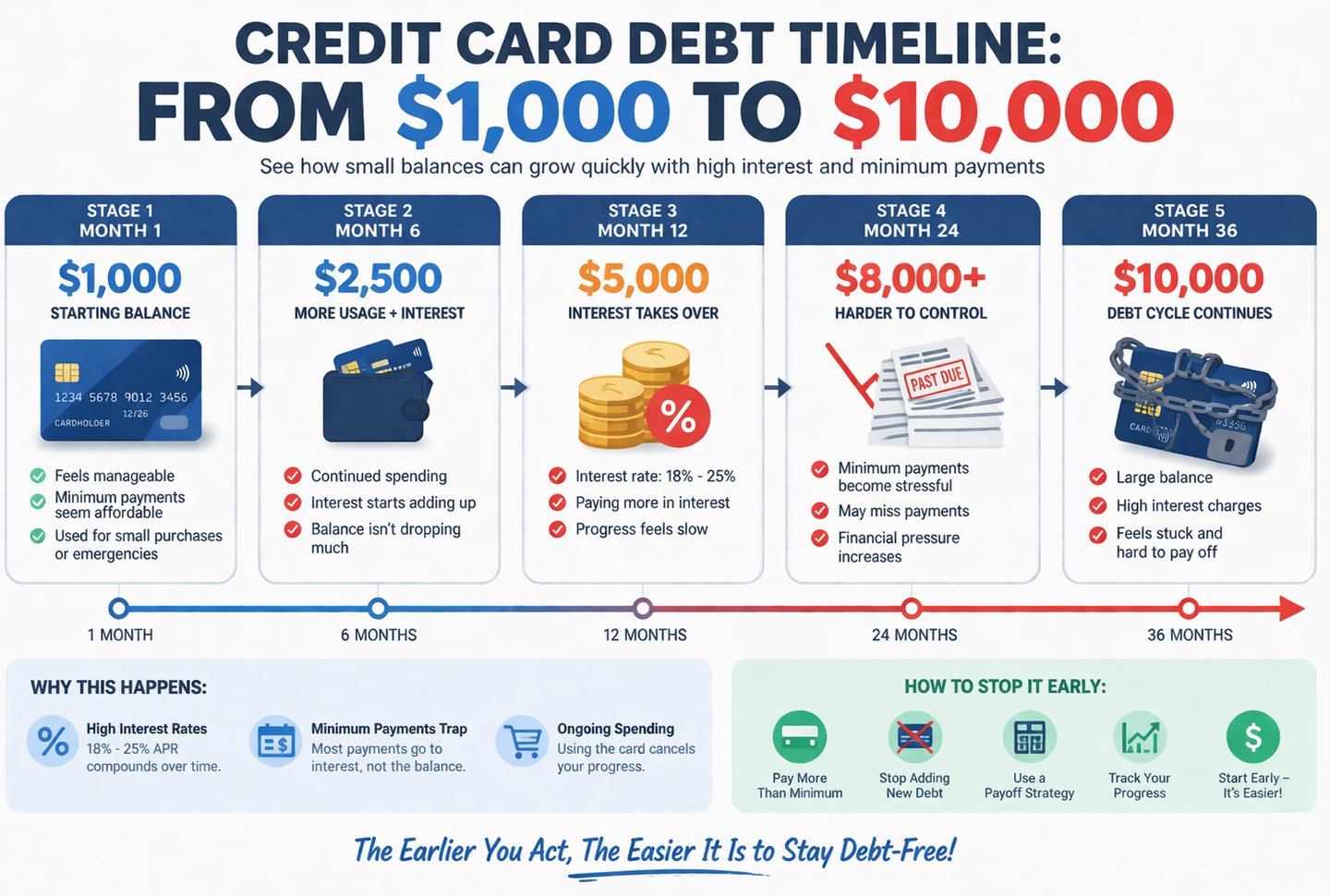
Stage 1: The First $1,000 (Feels Manageable)
At this stage:
You might use your card for emergencies
Minimum payments feel affordable
You’re not too worried
👉 The problem:
You’re likely only paying the minimum, which mostly covers interest — not the actual balance.
Stage 2: $2,000–$3,000 (The Habit Builds)
What happens:
You continue using the card
Interest starts adding up
You rely on credit more often
👉 This is where it becomes a pattern
Even if you’re making payments, your balance isn’t dropping much.
Stage 3: $4,000–$6,000 (Interest Takes Over)
Now things accelerate:
Interest charges become noticeable
Minimum payments increase
Progress feels slow
Example:
Balance: $5,000
Interest: ~18–25%
👉 You could be paying hundreds in interest every month
Stage 4: $7,000–$10,000 (The Debt Trap)
At this point:
Minimum payments feel stressful
You may start missing payments
Financial pressure increases
👉 This is where many people feel stuck
Even large payments don’t seem to reduce the balance much.
Why This Happens
1. High Interest Rates
Credit cards often charge: 👉 18% to 25% interest
This compounds over time.
2. Minimum Payments Trap
Minimum payments are designed to:
Keep you paying longer
Maximize interest
👉 You stay in debt longer than expected
3. Ongoing Spending
Using the card while paying it off:
Cancels your progress
Increases your balance
Simple Timeline Example
How to Stop It Early
✔ Pay More Than the Minimum
Even small extra payments reduce interest.
✔ Stop Adding New Debt
Pause spending on the card if possible.
✔ Use a Payoff Strategy
✔ Use Debt Tools
Track and plan your payoff with tools like:
The Turning Point
The earlier you act, the easier it is.
👉 $1,000 is easy to fix
👉 $10,000 takes much longer
Time is your biggest advantage — or your biggest risk.
Final Thoughts
Credit card debt doesn’t grow overnight — but it builds faster than most people expect.
Understanding the timeline helps you:
Take control earlier
Avoid long-term stress
Save money on interest
Start now — even small steps make a big difference.
Related Tools:
ClearEveryday
Free financial calculators and practical money tools for everyday decisions.
Plan your budget, manage debt, build savings, explore investing and understand your money — with simple tools and no sign-up required.
Link
© ClearEveryday 2026. All rights reserved.
About
“For informational purposes only — not financial advice.”